Topical Rx therapies alone may not provide adequate control for many patients
Patients with moderate-to-severe AD aged 6+ months may be appropriate for DUPIXENT if they have1-3:
- Uncontrolled disease despite trying a variety of topical Rx therapies
- Inadequate control of pruritus
- Erythema and papulation/infiltration that are moderate to severe
- ≥10% of their body covered in lesions
- Disease involving problem areas such as the face, hands, and feet
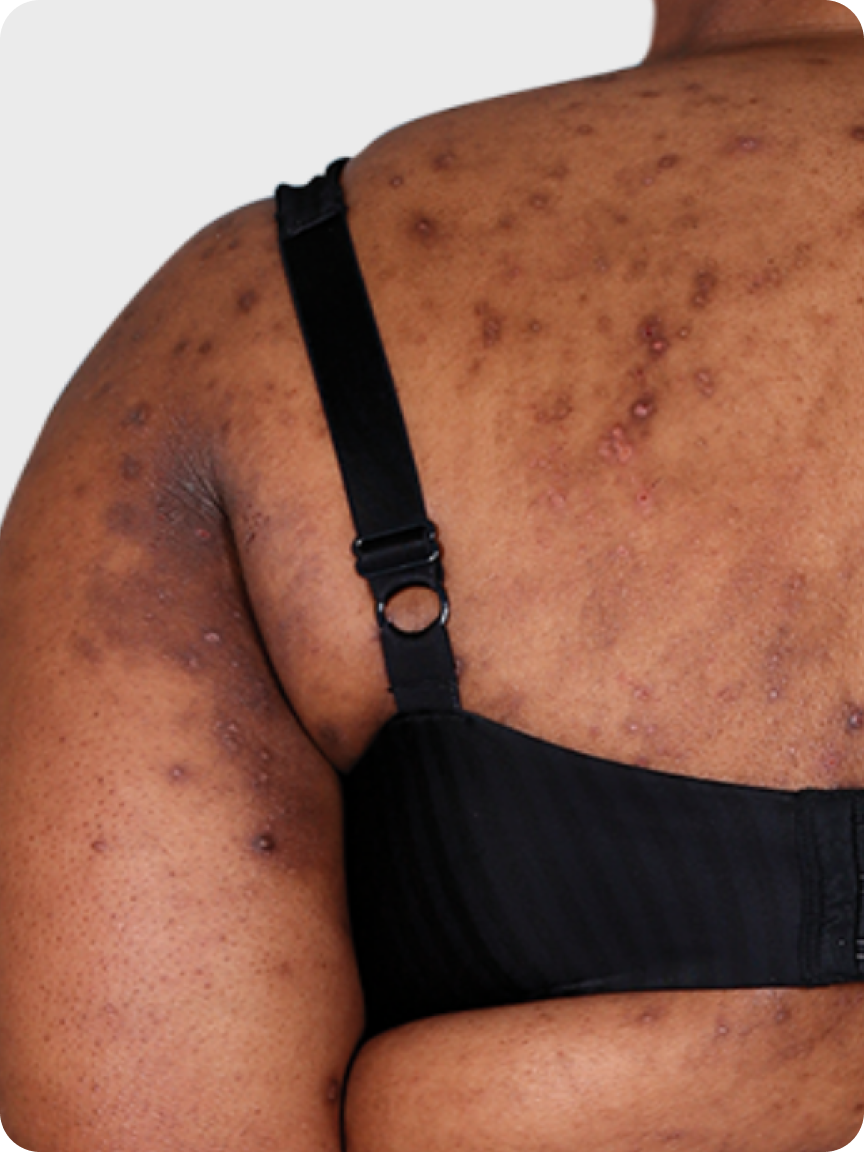
CASE STUDY: 40-year-old female
CASE HISTORY
- Initially had itch and hyperpigmentation on arms, back, and chest
- Saw multiple providers who each prescribed medium-potency TCS
- Consulted a specialist after 7 years
CURRENT STATUS
- Completed 3 rounds of high-potency TCS in past year
- Hyperpigmented papules, patches, and plaques across back and arms
- Frustrated by frequent TCS application, describing it as “cumbersome” and “uncomfortable”
Real image of uncontrolled moderate-to-severe AD.
Story inspired by people who suffer from AD.
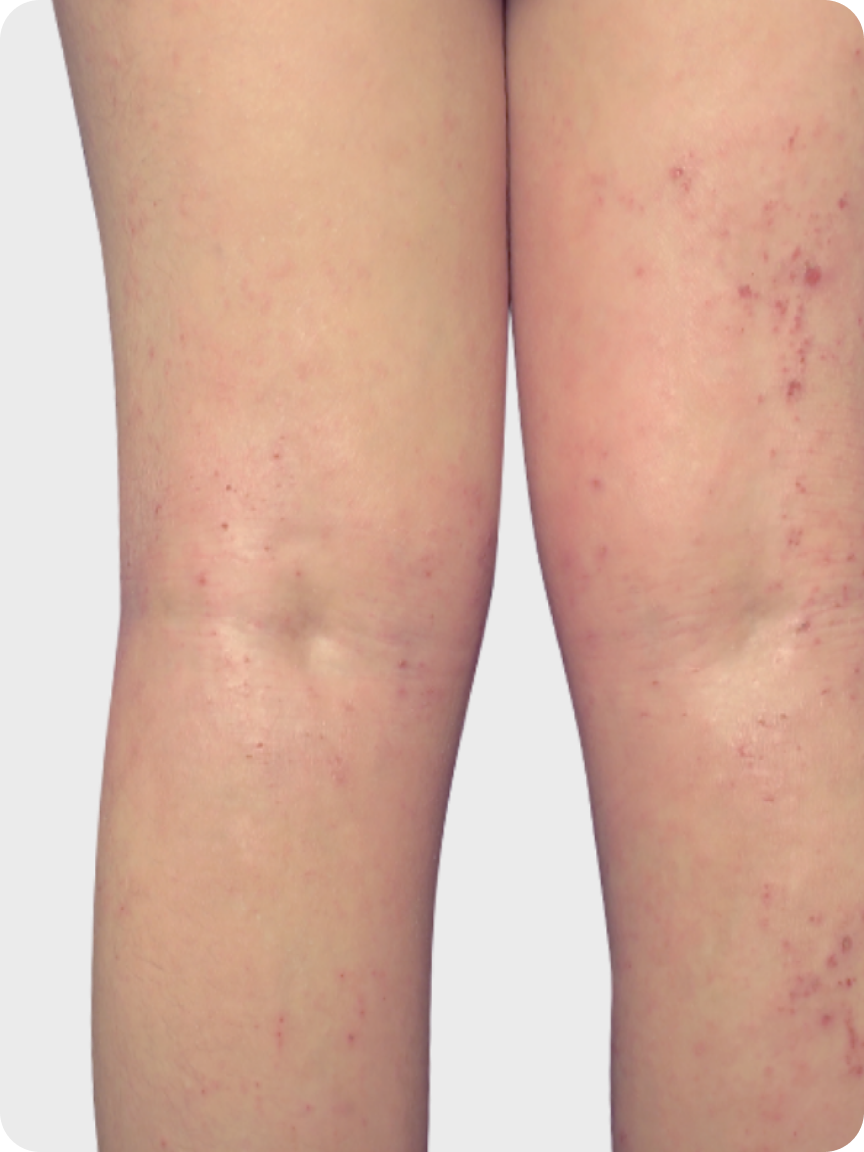
CASE STUDY: 18-year-old female
CASE HISTORY
- Legs and arms affected by itch and lesions
- PCP prescribed medium-potency TCS
- Consulted specialist after 2 years of inadequate control
CURRENT STATUS
- Almost daily application of medium-potency TCS for past 6 months
- Itchy every day and night; patient says, “it's just my normal”
- Enjoys sports, but the uniforms exacerbate her itch
- Fidgety and distracted during office visits
Real image of uncontrolled moderate-to-severe AD.
Story inspired by people who suffer from AD.
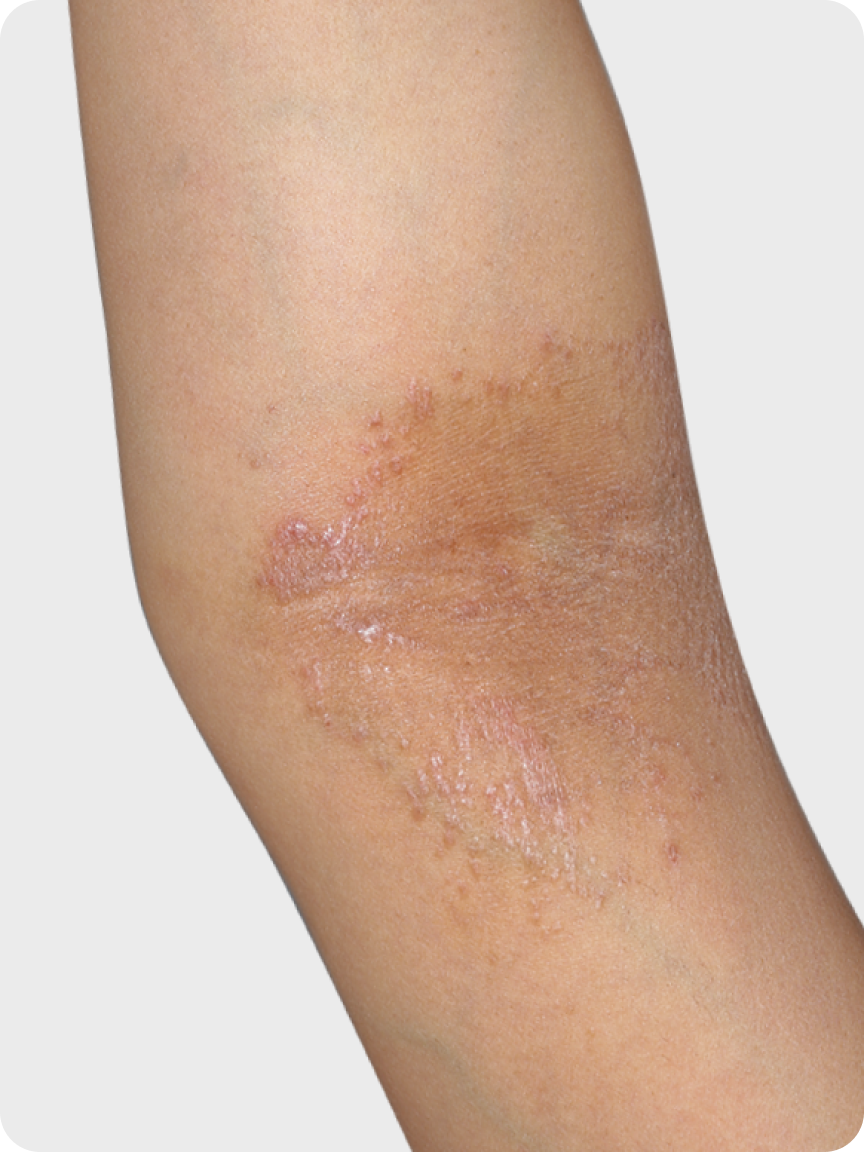
CASE STUDY: 12-year-old male
CASE HISTORY
- Dry patches and lichenification developed on arms and torso, along with itch
- PCP prescribed medium-potency TCS, which failed to fully resolve lesions
- Consulted specialist after 1 year
CURRENT STATUS
- Primarily using high-potency TCS for the past 6 months
- Stepping down to medium-potency TCS hasn't been successful
- Always wears long sleeves and pants to cover up, but is “used to it”
Real image of uncontrolled moderate-to-severe AD.
Story inspired by people who suffer from AD.
CASE STUDY: 40-year-old female
CASE HISTORY
- Initially had itch and hyperpigmentation on arms, back, and chest
- Saw multiple providers who each prescribed medium-potency TCS
- Consulted a specialist after 7 years
CURRENT STATUS
- Completed 3 rounds of high-potency TCS in past year
- Hyperpigmented papules, patches, and plaques across back and arms
- Frustrated by frequent TCS application, describing it as “cumbersome” and “uncomfortable”
Real image of uncontrolled moderate-to-severe AD.
Story inspired by people who suffer from AD.
CASE STUDY: 18-year-old female
CASE HISTORY
- Legs and arms affected by itch and lesions
- PCP prescribed medium-potency TCS
- Consulted specialist after 2 years of inadequate control
CURRENT STATUS
- Almost daily application of medium-potency TCS for past 6 months
- Itchy every day and night; patient says, “it's just my normal”
- Enjoys sports, but the uniforms exacerbate her itch
- Fidgety and distracted during office visits
Real image of uncontrolled moderate-to-severe AD.
Story inspired by people who suffer from AD.
CASE STUDY: 12-year-old male
CASE HISTORY
- Dry patches and lichenification developed on arms and torso, along with itch
- PCP prescribed medium-potency TCS, which failed to fully resolve lesions
- Consulted specialist after 1 year
CURRENT STATUS
- Primarily using high-potency TCS for the past 6 months
- Stepping down to medium-potency TCS hasn't been successful
- Always wears long sleeves and pants to cover up, but is “used to it”
Real image of uncontrolled moderate-to-severe AD.
Story inspired by people who suffer from AD.
Is this patient ready for DUPIXENT?
Watch healthcare providers discuss when patients may be ready for DUPIXENT
AD, atopic dermatitis; IGA, Investigator’s Global Assessment; PCP, primary care physician; TCS, topical corticosteroids.