Improvement in lesion extent and severity in 3 pivotal trials
EASI-75 AT WEEK 16
(secondary endpoint)1-4,a,b
The results present are not intended to be comparative across clinical trials.
- At Week 16 in pivotal trials, pediatric patients achieving the primary endpoint of IGA 0 (clear) or 1 (almost clear), and in adolescents ≥2-point improvement, were as follows: infants to preschoolers (6 months to 5 years): 28% receiving DUPIXENT 200/300 mg Q4W + TCS (n=83) vs 4% receiving placebo + TCS (n=79; P<0.0001); children (6–11 years) weighing <30 kg: 30% receiving DUPIXENT 300 mg Q4W + TCS (n=61) vs 13% receiving placebo + TCS (n=61); children (6–11 years) weighing ≥30 kg: 39% receiving DUPIXENT 200 mg Q2W + TCS (n=59) vs 10% receiving placebo + TCS (n=62); adolescents (12–17 years): 24% receiving DUPIXENT 200/300 mg Q2W (n=82) vs 2% receiving placebo (n=85; P<0.001)1‑4,a,b
aFull analysis set includes all subjects randomized.1
bIn the primary analyses of the efficacy endpoints, subjects who received rescue treatment or with missing data were considered nonresponders.1
EASI-90 and EASI-75 at 3 years
AD-1434 (OLE)
(6 MONTHS-5 YEARS)
EASI-90 and EASI-755
Limitation of analysis: Due to the open-label extension study design, results should be interpreted with consideration of potential selection bias.
AD-1434 STUDY DESIGN: Ongoing phase 3 open-label extension study in patients aged ≥6 months to <18 years with moderate-to-severe AD who participated in a DUPIXENT parent study. Data reflect exposure for 180 infants to preschoolers (aged 6 months to 5 years) and 383 children (aged 6-11 years). A total of 103 infants to preschoolers and 247 children completed 152 weeks of treatment. 1.7% of participants aged 6 months-5 years and 0.8% of participants aged 6-11 years discontinued due to treatment-emergent adverse reactions. Data presented are as observed5-7:
- Infants to preschoolers received DUPIXENT 200 mg Q4W (patients weighing 5 to <15 kg) or 300 mg Q4W (patients weighing 15 to <30 kg)
- Children received DUPIXENT 300 mg Q4W or were uptitrated to 200 mg Q2W (patients weighing 30 to <60 kg) or 300 mg Q2W (patients weighing ≥60 kg)
- Concomitant use of topical AD treatments (low-potency TCS, TCI, etc) was allowed
AD-1434 (OLE)
(6-11 YEARS)
EASI-90 and EASI-755
Limitation of analysis: Due to the open-label extension study design, results should be interpreted with consideration of potential selection bias.
AD-1434 STUDY DESIGN: Ongoing phase 3 open-label extension study in patients aged ≥6 months to <18 years with moderate-to-severe AD who participated in a DUPIXENT parent study. Data reflect exposure for 180 infants to preschoolers (aged 6 months to 5 years) and 383 children (aged 6-11 years). A total of 103 infants to preschoolers and 247 children completed 152 weeks of treatment. 1.7% of participants aged 6 months-5 years and 0.8% of participants aged 6-11 years discontinued due to treatment-emergent adverse reactions. Data presented are as observed5-7:
- Infants to preschoolers received DUPIXENT 200 mg Q4W (patients weighing 5 to <15 kg) or 300 mg Q4W (patients weighing 15 to <30 kg)
- Children received DUPIXENT 300 mg Q4W or were uptitrated to 200 mg Q2W (patients weighing 30 to <60 kg) or 300 mg Q2W (patients weighing ≥60 kg)
- Concomitant use of topical AD treatments (low-potency TCS, TCI, etc) was allowed
See skin improvement data in other AD populations
Visible results with DUPIXENT
2 YEARS OF AGE: 2-POINT IMPROVEMENT IN IGA
Actual patient in a phase 3 DUPIXENT trial (AD-1539) in infants to preschoolers (aged 6 months to 5 years). Patient was prescribed concomitant low-potency TCS based on the clinical trial program. Individual results may vary.8

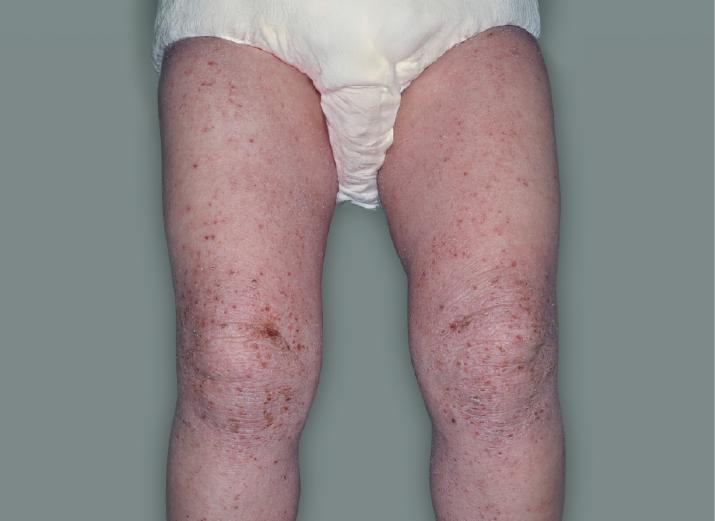
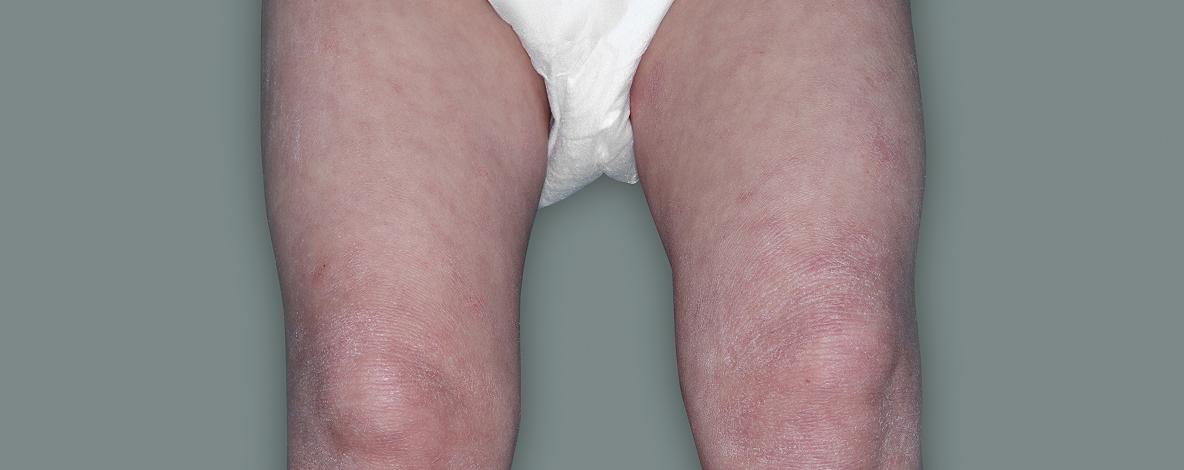
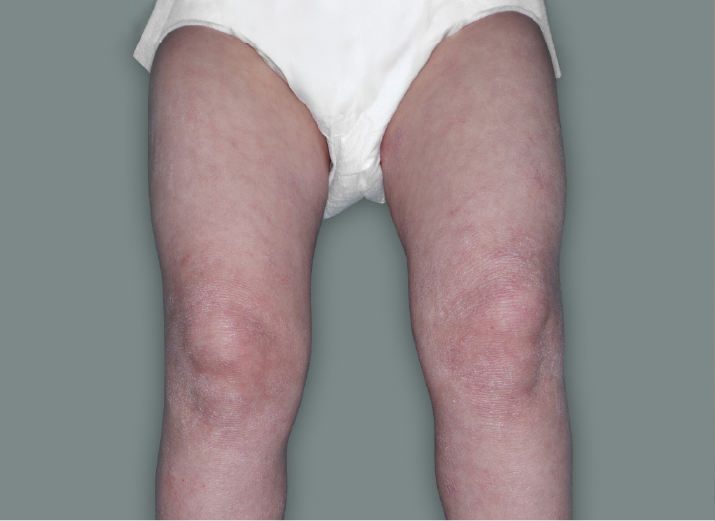
A clinical responder was defined as a patient achieving IGA 0 or 1.1
- Patient did not meet the primary endpoint in the clinical trial based on their IGA score at Week 16
3 YEARS OF AGE: 2-POINT IMPROVEMENT IN IGA
Actual patient in a phase 3 DUPIXENT trial (AD-1539) in infants to preschoolers (aged 6 months to 5 years). Patient was prescribed concomitant low-potency TCS based on the clinical trial program. This patient was considered a clinical responder. Individual results may vary.

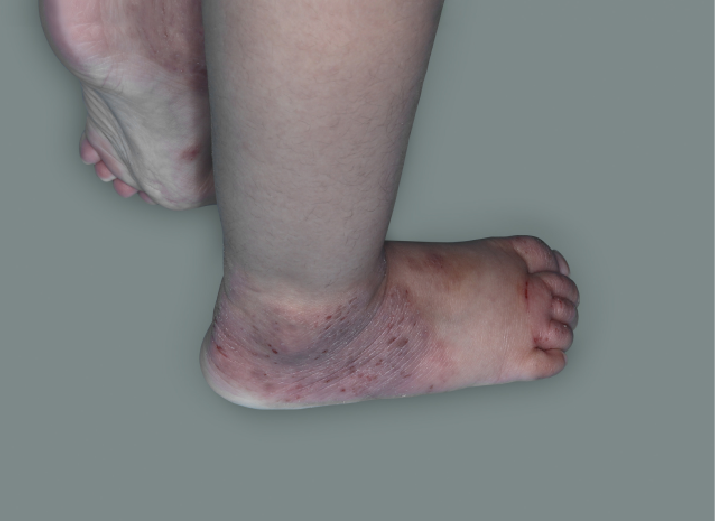

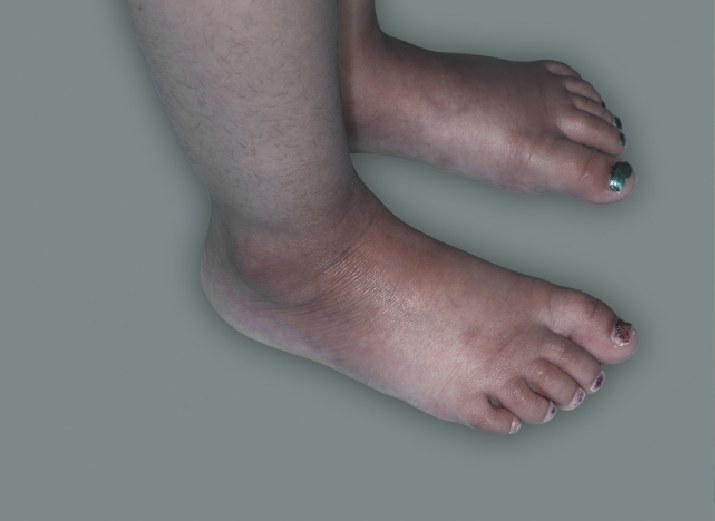
A clinical responder was defined as a patient achieving IGA 0 or 1.1
4 YEARS OF AGE: 3-POINT IMPROVEMENT IN IGA
Actual patient in a phase 3 DUPIXENT trial (AD-1539) in infants to preschoolers (aged 6 months to 5 years). Patient was prescribed concomitant low-potency TCS based on the clinical trial program. This patient was considered a clinical responder. Individual results may vary.8
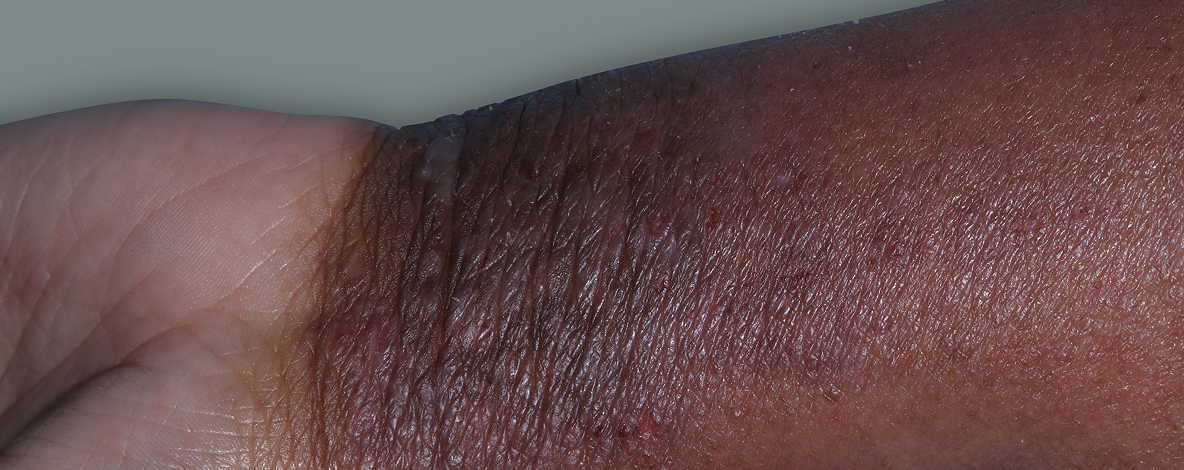
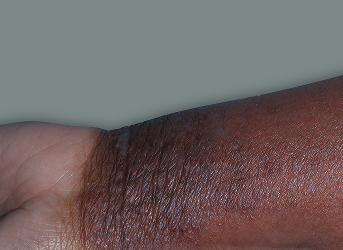
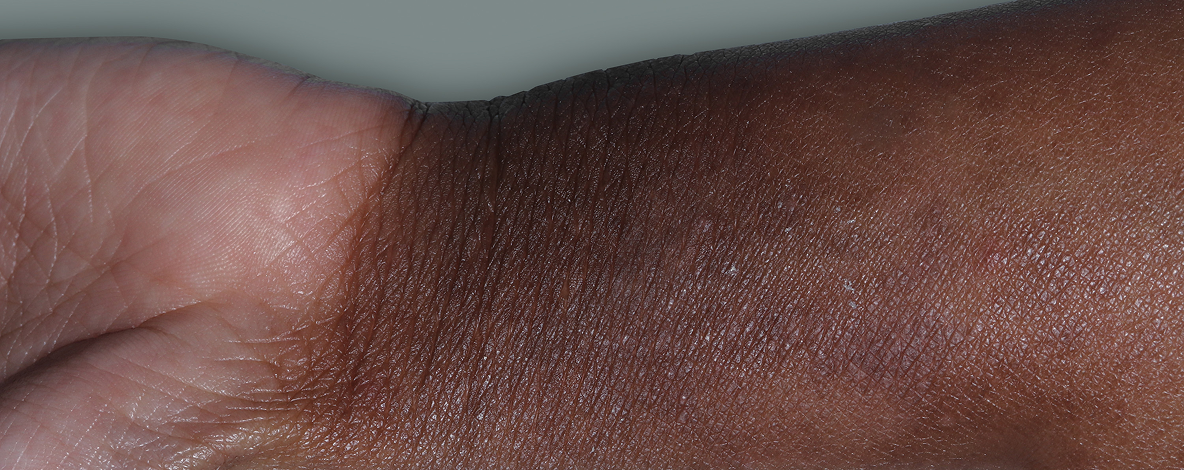
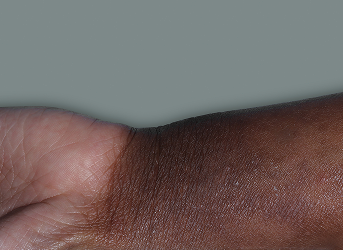
A clinical responder was defined as a patient achieving IGA 0 or 1.1
2 YEARS OF AGE: 2-POINT IMPROVEMENT IN IGA
Actual patient in a phase 3 DUPIXENT trial (AD-1539) in infants to preschoolers (aged 6 months to 5 years). Patient was prescribed concomitant low-potency TCS based on the clinical trial program. Individual results may vary.8
A clinical responder was defined as a patient achieving IGA 0 or 1.1
- Patient did not meet the primary endpoint in the clinical trial based on their IGA score at Week 16
3 YEARS OF AGE: 2-POINT IMPROVEMENT IN IGA
Actual patient in a phase 3 DUPIXENT trial (AD-1539) in infants to preschoolers (aged 6 months to 5 years). Patient was prescribed concomitant low-potency TCS based on the clinical trial program. This patient was considered a clinical responder. Individual results may vary.
A clinical responder was defined as a patient achieving IGA 0 or 1.1
4 YEARS OF AGE: 3-POINT IMPROVEMENT IN IGA
Actual patient in a phase 3 DUPIXENT trial (AD-1539) in infants to preschoolers (aged 6 months to 5 years). Patient was prescribed concomitant low-potency TCS based on the clinical trial program. This patient was considered a clinical responder. Individual results may vary.8
A clinical responder was defined as a patient achieving IGA 0 or 1.1
6 YEARS OF AGE: 3-POINT IMPROVEMENT IN IGA
Actual patient in a phase 3 pediatric DUPIXENT trial (AD-1652). Patient was prescribed concomitant TCS based on the clinical trial program. This patient was considered a clinical responder. Individual results may vary.9




A clinical responder was defined as a patient achieving IGA 0 or 1.1
6 YEARS OF AGE: 1-POINT IMPROVEMENT IN IGA
Actual patient in a phase 3 pediatric DUPIXENT trial (AD-1652). Patient was prescribed concomitant TCS based on the clinical trial program. Individual results may vary.
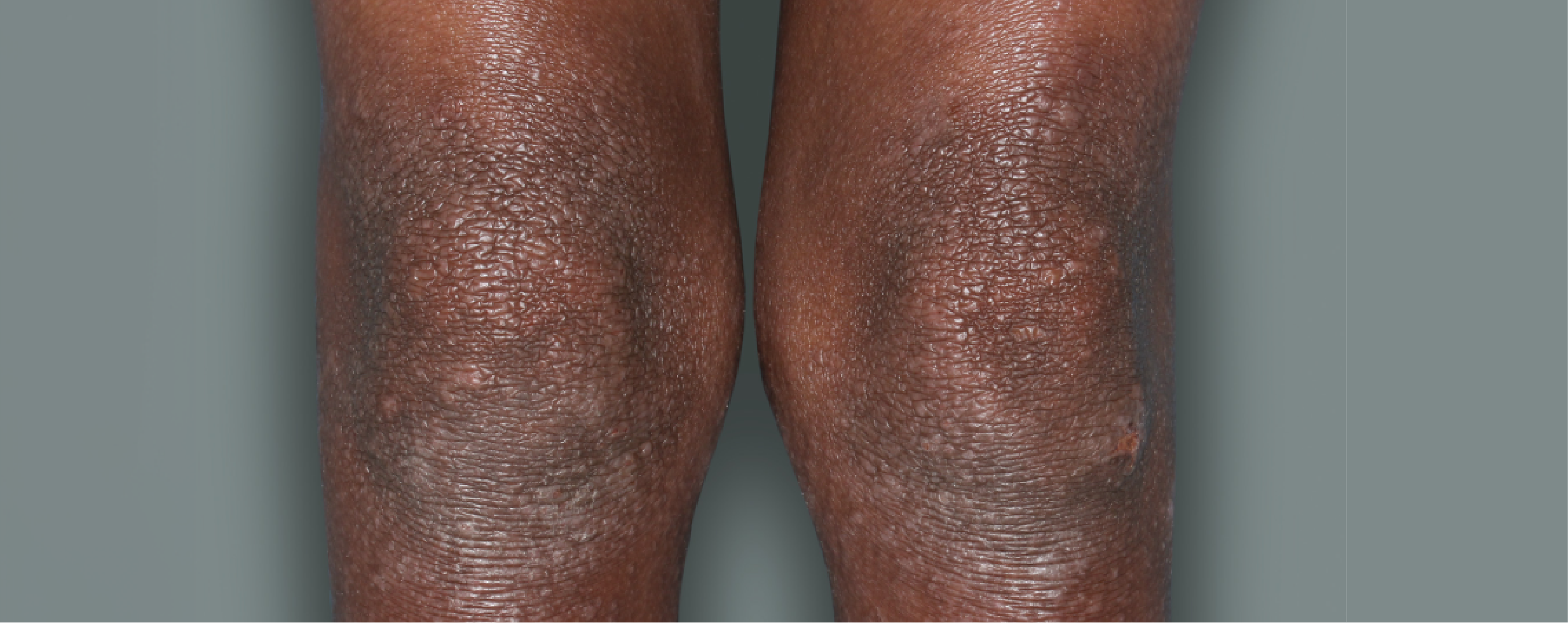
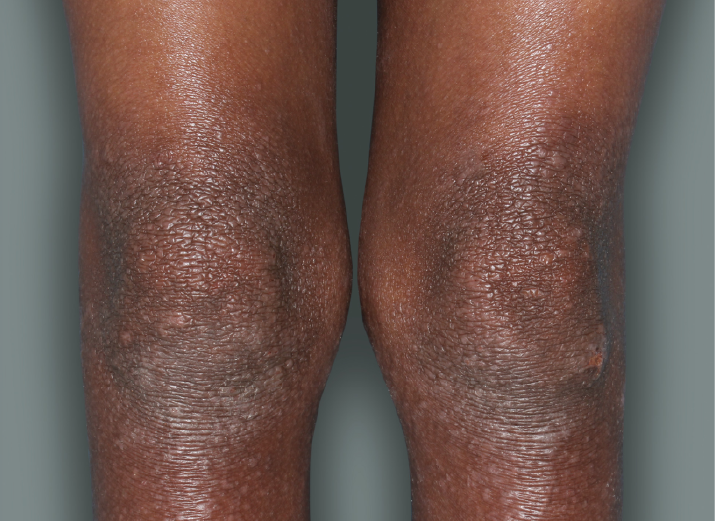
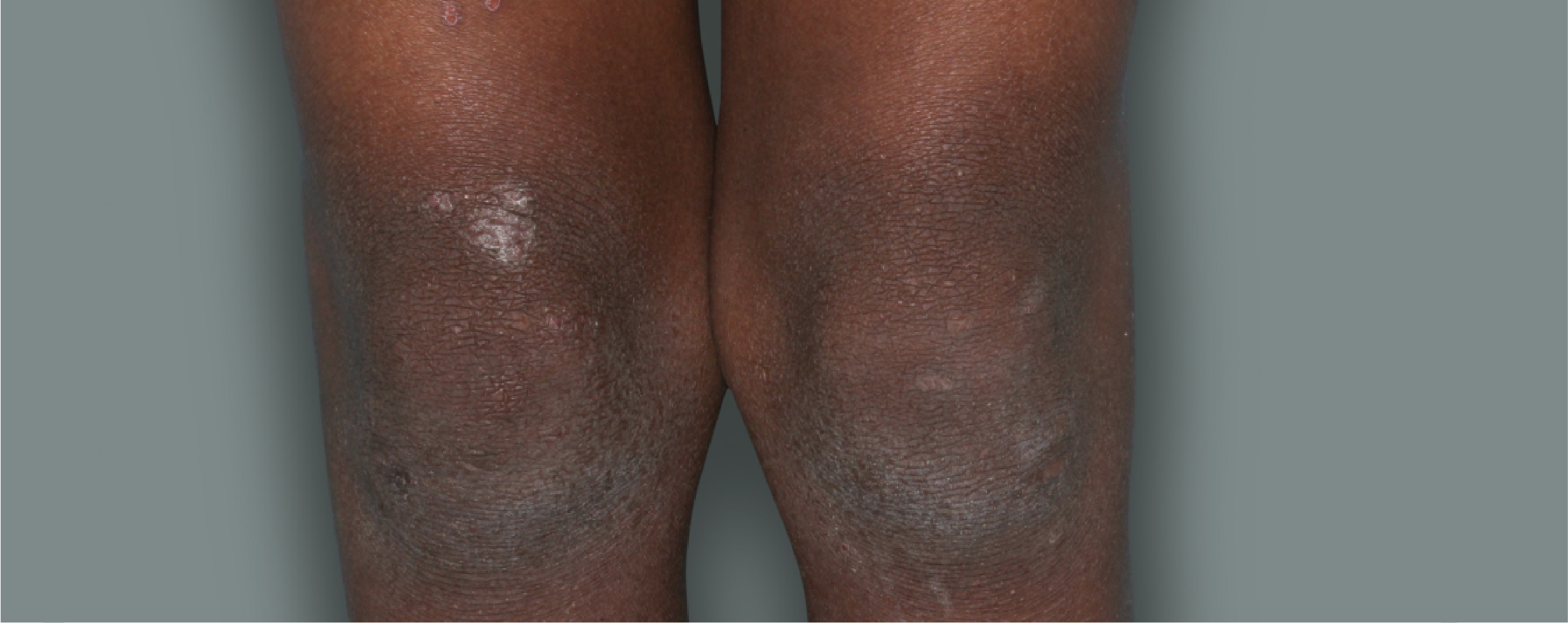
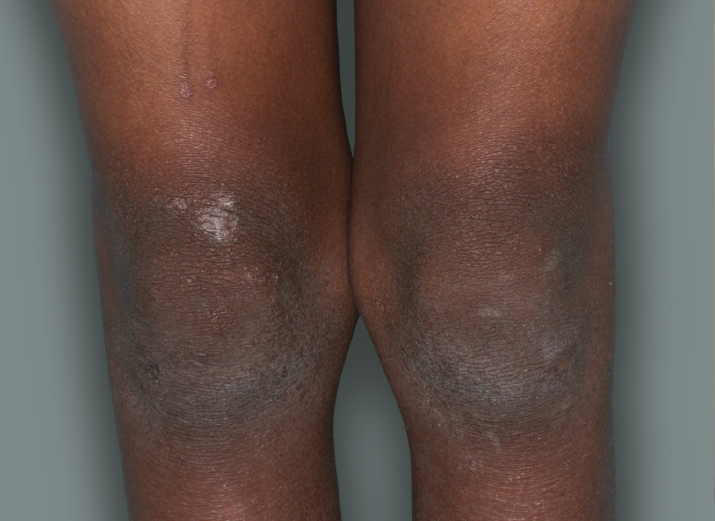
A clinical responder was defined as a patient achieving IGA 0 or 1.1
- Patient did not meet the primary endpoint in the clinical trial based on their IGA score at Week 16
9 YEARS OF AGE: 3-POINT IMPROVEMENT IN IGA
Actual patient in a phase 3 pediatric DUPIXENT trial (AD-1652). Patient was prescribed concomitant TCS based on the clinical trial program. This patient was considered a clinical responder. Individual results may vary.9



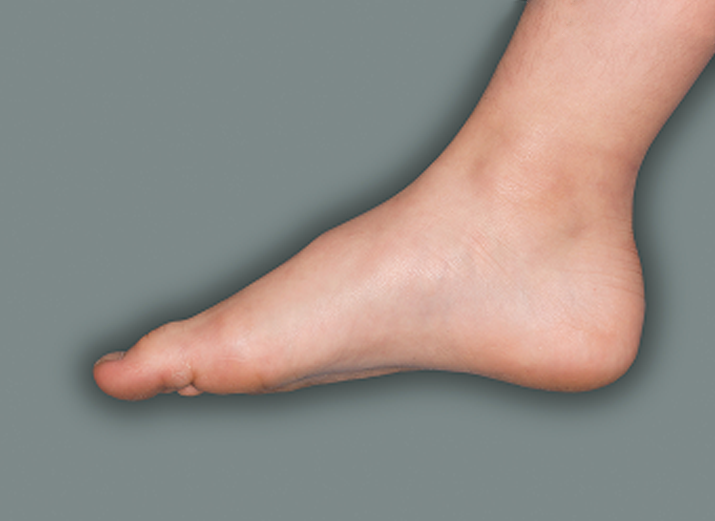
A clinical responder was defined as a patient achieving IGA 0 or 1.1
10 YEARS OF AGE: 3-POINT IMPROVEMENT IN IGA
Actual patient in a phase 3 pediatric DUPIXENT trial (AD-1652). Patient was prescribed concomitant TCS based on the clinical trial program. This patient was considered a clinical responder. Individual results may vary.9


.af90b0bee0c262c35cb40cdf78297bca.png)
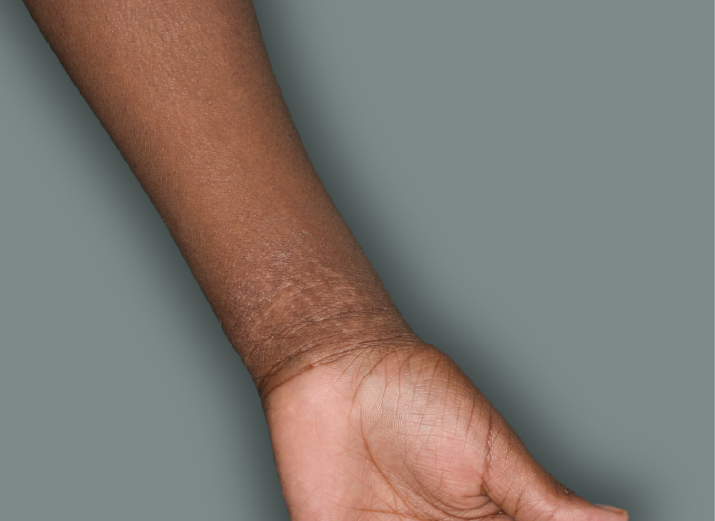
A clinical responder was defined as a patient achieving IGA 0 or 1.1
6 YEARS OF AGE: 3-POINT IMPROVEMENT IN IGA
Actual patient in a phase 3 pediatric DUPIXENT trial (AD-1652). Patient was prescribed concomitant TCS based on the clinical trial program. This patient was considered a clinical responder. Individual results may vary.9
A clinical responder was defined as a patient achieving IGA 0 or 1.1
6 YEARS OF AGE: 1-POINT IMPROVEMENT IN IGA
Actual patient in a phase 3 pediatric DUPIXENT trial (AD-1652). Patient was prescribed concomitant TCS based on the clinical trial program. Individual results may vary.
A clinical responder was defined as a patient achieving IGA 0 or 1.1
- Patient did not meet the primary endpoint in the clinical trial based on their IGA score at Week 16
9 YEARS OF AGE: 3-POINT IMPROVEMENT IN IGA
Actual patient in a phase 3 pediatric DUPIXENT trial (AD-1652). Patient was prescribed concomitant TCS based on the clinical trial program. This patient was considered a clinical responder. Individual results may vary.9
A clinical responder was defined as a patient achieving IGA 0 or 1.1
10 YEARS OF AGE: 3-POINT IMPROVEMENT IN IGA
Actual patient in a phase 3 pediatric DUPIXENT trial (AD-1652). Patient was prescribed concomitant TCS based on the clinical trial program. This patient was considered a clinical responder. Individual results may vary.9
A clinical responder was defined as a patient achieving IGA 0 or 1.1
12 YEARS OF AGE: 2-POINT IMPROVEMENT IN IGA
Actual patient in the phase 3 adolescent DUPIXENT trial (AD-1526). Patient had a baseline IGA of 4 and EASI of 31. Individual results may vary.


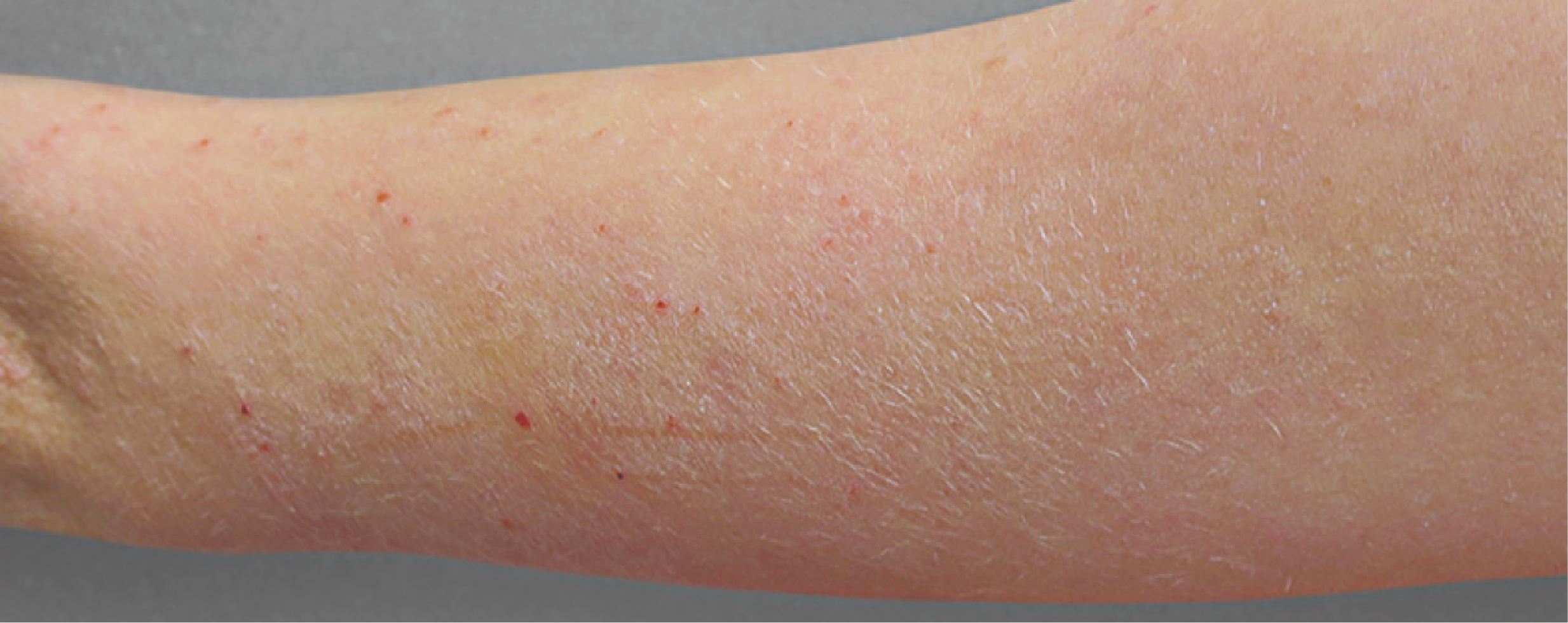
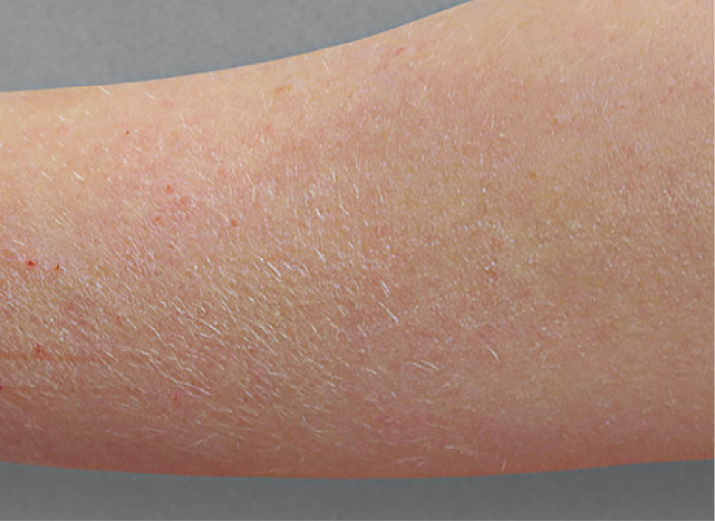
A clinical responder was defined as a patient achieving IGA 0 or 1 and ≥2-point improvement from baseline.1
- Patient did not meet the primary endpoint in the clinical trial based on their IGA score at Week 16
12 YEARS OF AGE: 2-POINT IMPROVEMENT IN IGA
Actual patient in the phase 3 adolescent DUPIXENT trial (AD-1526). Patient had a baseline IGA of 4 and EASI of 31. Individual results may vary.
A clinical responder was defined as a patient achieving IGA 0 or 1 and ≥2-point improvement from baseline.1
- Patient did not meet the primary endpoint in the clinical trial based on their IGA score at Week 16
The Eczema Area and Severity Index (EASI) combines the severity of eczema signs and the extent of skin involvement to measure lesional signs of AD.10
The severity of each of 4 eczema signs is assessed on a scale of 0 to 310
- The signs of eczema (erythema, edema/papulation, excoriation, and lichenification) are graded using a defined process by the extent to which the patient is affected
The extent of lesions in each body region is evaluated10
- The extent of lesions in each body region is evaluated based on the percentage of involvement and is given a value between 0 and 6
- Each body region value is then weighted by a corresponding multiplier; lower extremities are weighted more while head and neck are weighted the least
Each region gets a total region score10:
Severity Score x Area Score x Multiplier = Region Score
The final EASI score is the sum of all 4 region scores. The composite score, on a scale from 0 to 72, determines the severity of the signs of eczema and the extent to which the patient is affected.9,a
An improvement of at least 75% in lesion extent and severity (EASI-75) from baseline is a clinically meaningful change.1
aIn patients <8 years of age, the multipliers for the head and neck are 0.2, the trunk is 0.3, the upper extremities are 0.2, and the lower extremities are 0.3. In patients ≥8 years of age, the multipliers for the head and neck are 0.1, the trunk is 0.3, the upper extremities are 0.2, and the lower extremities are 0.4.10
Investigator's Global Assessment (IGA) for skin clearance assesses the overall severity of clinical signs of atopic dermatitis using a 0- to 4-point scoring system.11
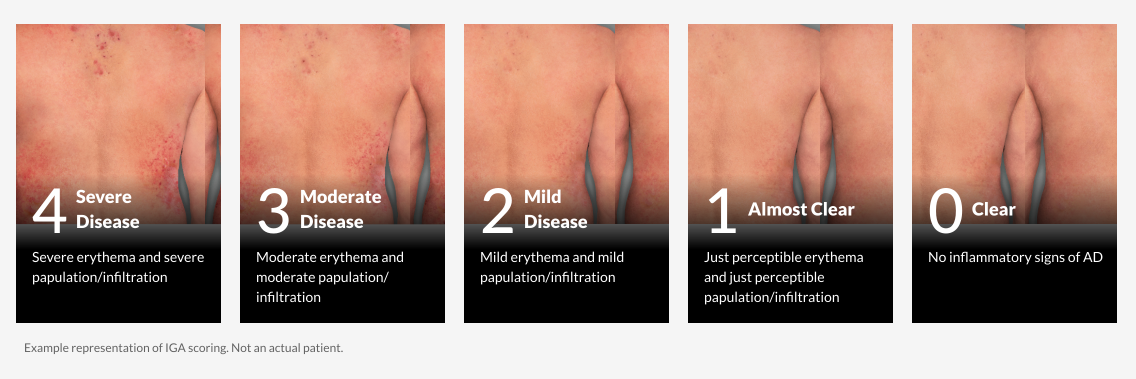
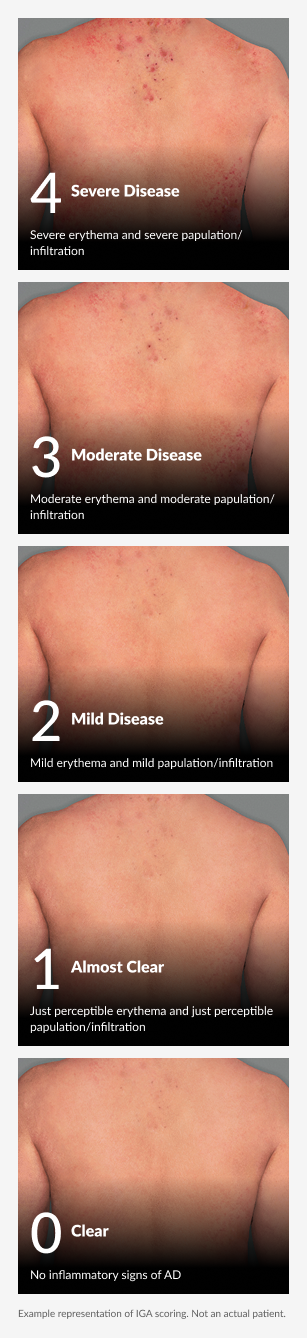
A clinical responder was defined as a patient achieving IGA 0 or 1 and, in adults and adolescents, ≥2-point improvement from baseline.1
Watch healthcare providers discuss skin clearance with DUPIXENT
AD, atopic dermatitis; EASI, Eczema Area and Severity Index; IGA, Investigator’s Global Assessment; OLE, open-label extension; Q2W, every 2 weeks; Q4W, every 4 weeks; TCI, topical calcineurin inhibitor; TCS, topical corticosteroids.