Real-world improvement in itch and nodules at Months 3, 6, and 12
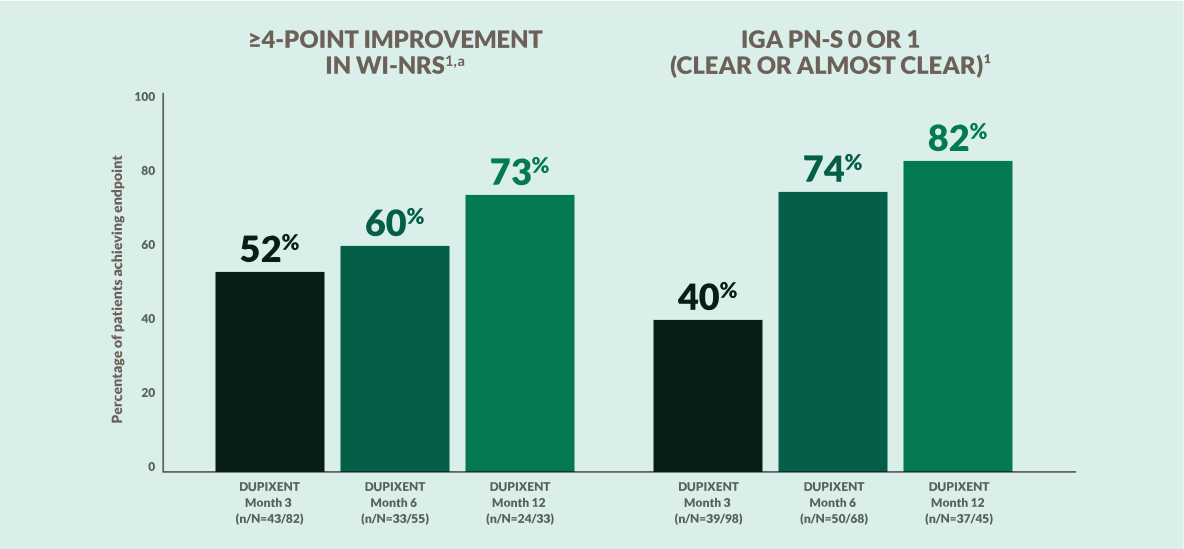
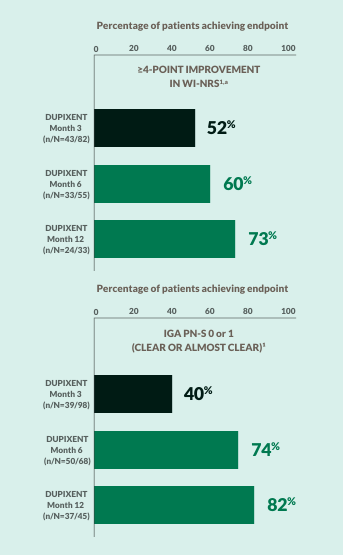
- Complete or near-complete itch response (WI-NRS score of 0/1)b was achieved by1
- 18% of patients (n/N=17/95) at Month 3
- 39% of patients (n/N=27/69) at Month 6
- 43% of patients (n/N=20/47) at Month 12
FRENCH EARLY ACCESS PROGRAM: These data are from adults with PN who received DUPIXENT (N=155) after early access authorization was given by the French Health Authorities. The program enrolled patients who had ≥20 nodular lesions (an IGA PN-S score of 3 or 4) between November 9, 2022, and April 30, 2024. All patients received DUPIXENT 300 mg Q2W after an initial loading dose of 600 mg. This analysis is from data collected at Month 3, Month 6, and Month 12 follow-up visits. The difference between total number of patients exposed to DUPIXENT and the number for whom data were collected is due to missing data.
Limitations of analysis: Patients could also be treated with other PN medications. There could be bias toward better outcomes in patients who continue providing data in this real-world study.1
aBaseline WI-NRS score was 7.1 (SD, 2.0).
bAt baseline, 2% of patients (n/N=2/132) had a WI-NRS score of <3.
Real-world patient satisfaction
with their overall PN treatment at Month 6 (60 of 85)
with their overall PN treatment
RELIEVE-PN: RELIEVE-PN is an ongoing, single-arm, prospective, observational study in adults with PN enrolled in DUPIXENT MyWay® prior to initiating treatment with DUPIXENT. Patients completed survey at baseline (prior to DUPIXENT treatment), Month1, Month 3, and Month 6. Data are from an interim analysis of patients who completed survey at Month 6 (n=85). Patient-reported satisfaction with their current PN treatment was reported using a 7-point Likert scale that ranged from "extremely satisfied" to "extremely dissatisfied." Limitations of analysis: The survey data were collected from patients who enrolled in the DUPIXENT patient support program, and these patients may have different characteristics and perspectives vs those who did not enroll. Patients who continue to respond to long-term surveys may be self-selecting for favorable effectiveness and safety. "As observed" data may bias results. Safety and tolerability data were not collected.2
Trial Designs: A total of 311 adults in PRIME and PRIME2 with prurigo nodularis were randomized to DUPIXENT or placebo. All DUPIXENT-treated participants received 300 mg Q2W after a 600 mg loading dose. At baseline, participants had an average WI-NRS score of ≥7 (on a scale of 0 to 10) and ≥20 prurigo nodularis lesions in total at screening visit and Day 1 (inclusion criteria). In addition, ≈60% of participants were on a background therapy of TCS/TCI, and 43% had a history of atopy (defined as having a medical history of atopic dermatitis, allergic rhinitis/rhinoconjunctivitis, asthma, or food allergy). No participants had moderate-to-severe atopic dermatitis at study entry or at any time 6 months prior to study entry (exclusion criteria).3,4
Trial Results: The primary endpoint was the proportion of participants with improvement in WI-NRS by ≥4 points from baseline at Week 24 (60% of participants treated with DUPIXENT vs 18% with placebo in PRIME, P<0.001) and Week 12 (37% of participants treated with DUPIXENT vs 22% with placebo in PRIME2, P=0.022). Other endpoints included the proportion of participants with IGA PN-S 0 or 1 (defined as the equivalent of 0 to 5 nodules) at Week 24 (48% of participants treated with DUPIXENT vs 18% with placebo in PRIME, P<0.001; 45% of participants treated with DUPIXENT vs 16% with placebo in PRIME2, P<0.001) and the proportion of participants who achieved both ≥4-point improvement in WI-NRS and IGA PN-S 0 or 1 at Week 24 (39% of participants treated with DUPIXENT vs 9% with placebo in PRIME, P<0.001; 32% of participants treated with DUPIXENT vs 9% with placebo in PRIME2, P<0.001).3,4
Watch healthcare providers discuss why they choose DUPIXENT for their patients
IGA PN-S, Investigator’s Global Assessment PN-Stage; PN, prurigo nodularis; Q2W, once every 2 weeks; SD, standard deviation; TCI, topical calcineurin inhibitors; TCS, topical corticosteroids; WI-NRS, Worst Itch numerical rating scale.