EFFICACY IN PATIENTS 12+ YEARS

DUPIXENT was studied across histology, 

symptoms, and endoscopic features up to 52 weeks1,2

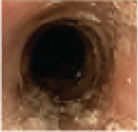
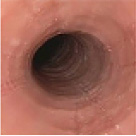
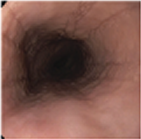
Not actual patients.

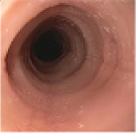
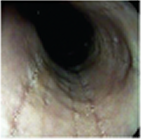
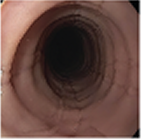
Not actual patients.

Histologic remission achieved with DUPIXENT1,2

Demonstrated histologic remission: 59% at week 24 and 85% at week 52

Histologic Remission
(≤6 EOS/HPF peak esophageal intraepithelial EOS count)

Week 24
Part B
Coprimary Endpoint
Week 52
Part B-C
Secondary Endpoint

Histologic Response
(<15 EOS/HPF peak esophageal
intraepithelial EOS count)

Week 24
Part B
Secondary Endpoint
Week 52
Part B-C
Secondary Endpoint

Histologic Response
  • Week 24 (Part A) Secondary Endpoint: 64% of patients with DUPIXENT (n=42) vs 8% with placebo (n=39)
  • Week 52 (Part A-C) Secondary Endpoint: 82% of patients after 52 weeks of treatment with DUPIXENT (n=34) and 70% after switching to DUPIXENT from placebo at Week 24 (n=30)
In Part B, histologic response was ordered after the point at which hierarchical testing procedure failed. Results are descriptive in the extended active treatment period at Week 52. Definitive conclusions cannot be made due to limitations associated with extended active treatment design, including lack of comparator arm and decreasing sample size.

Peak Esophageal Intraepithelial Eosinophil Count3,4

Used to confirm diagnosis and determine treatment response. Histologic data are reported as the percentage of patients achieving the defined EOS threshold

EOS, eosinophil; EOS/HPF, eosinophils per high-power field.

long-term reduction in the frequency and severity of dysphagia1,2

Reduction in DSQ score: 64% at week 24 and 81% at week 52a

Part A (Coprimary Endpoint at Week 24)

  • Week 4: 9-point reduction (28%) from baseline with DUPIXENT (n=42) vs 4-point reduction (11%) with placebo (n=39)
  • Week 24: 21.9-point reduction (69%) from baseline with DUPIXENT (n=42) vs 9.6-point reduction (32%) with placebo (n=39) (P<0.001)

Part A-C (Secondary Endpoint)

  • Week 52: 23.4-point reduction (76%) from baseline after 52 weeks of treatment with DUPIXENT (n=29)
  • Week 52: 21.7-point reduction (66%) from baseline after switching to DUPIXENT from placebo at Week 24 (n=23)

Results are descriptive in the extended active treatment period at Week 52. Definitive conclusions cannot be made due to limitations associated with extended active treatment design, including lack of comparator arm and decreasing sample size.

Week 4 assessment is a post hoc analysis; results are descriptive.

aTotal biweekly DSQ scores range from 0 to 84; higher scores indicate greater frequency and severity of dysphagia.

LSM, least squares mean.

The Dysphagia Symptom Questionnaire (DSQ)3

A patient-reported assessment that measures the frequency and severity of dysphagia over a 14-day period; higher score indicates greater frequency and severity of dysphagia

visible reduction in inflammatory and fibrotic features IN THE ESOPHAGUS2

Erefs total score was reduced at weeks 24 and 52

Part A
  • Week 24: 3.2-point reduction (49%) from baseline with DUPIXENT (n=42) vs 0.3-point reduction (5%) with placebo (n=39)
Part A-C
  • Week 52: 4.1-point reduction (63%) from baseline after 52 weeks of treatment with DUPIXENT (n=35)
  • Week 52: 3.9-point reduction (65%) from baseline after switching to DUPIXENT from placebo at Week 24 (n=30)
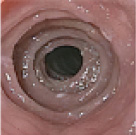
Thresholds for clinically meaningful changes in EREFS scores have not been established. Additionally in Part B, this endpoint was ordered after the point at which hierarchical testing procedure failed. Results are descriptive in the extended active treatment period at Week 52. Definitive conclusions cannot be made due to limitations associated with extended active treatment design, including lack of comparator arm and decreasing sample size.

Endoscopic Reference Score (EREFS)3

EREFS is a clinician-reported rating of the severity of 5 endoscopic features:
edema, rings, exudates, furrows, and stricture

EREFS IS USED TO DETERMINE SEVERITY OF 5 ENDOSCOPIC FINDINGS IN EOE:
EDEMA, RINGS, EXUDATES, FURROWS, AND STRICTURE3

EREFS CLASSIFICATION4,5

EDEMA

(Grades 0-2)

Grade 1

RINGS

(Grades 0-3)

Grade 3

EXUDATES

(Grades 0-2)

Grade 2

FURROWS

(Grades 0-2)

Grade 2

STRICTURE

(Grades 0-2)

Grade 1

Scores from the proximal and distal regions range from 0 to 9.3

The EREFS total score is the sum of those 2 regions (range 0-18).6

EXAMPLES OF ENDOSCOPIC IMAGES FROM THE ESOPHAGUS DEMONSTRATE MULTIPLE
WAYS TO ACHIEVE THE SAME SCORE3,7,8

EREFS SCORE OF 3 OUT OF 9a

E1, R1, E0, F1, S0

E1, R0, E0, F2, S0

EREFS SCORE OF 5 OUT OF 9a

E1, R2, E0, F1, S1

E1, R2, E1, F1, S0

a Endoscopic images are from a region of the esophagus in different patients and are not composite EREFS total scores. Endoscopic images are for reference only.

Adapted by permission from BMJ Publishing Group Limited. Gut, Hirano I et al, vol. 62, pages 489-495 (2013). Adapted with permission from Wolters Kluwer Health, Inc.: Kia L, Hirano I. Advances in the endoscopic evaluation of eosinophilic esophagitis, Curr Opin Gastroenterol, vol. 32(4), pages 325-331. https://journals.lww.com/co-gastroenterology/ Reprinted from J Allergy Clin lmmunol Pract, vol. 6(5), Steinbach EC et al, Eosinophilic esophagitis and the eosinophilic gastrointestinal diseases: approach to diagnosis and management, pages 1483-1495 (2018), with permission from Elsevier.