)
Dysphagia
PARTNER WITH A SPECIALIST FOR YOUR PATIENT
This tool can help you find a specialist. Finding a specialist is key to your patient’s EoE diagnosis.3
Sanofi US and Regeneron do not endorse or recommend any particular physician, and search results do not include a comprehensive list of doctors in your area.

IMPORTANCE OF DIAGNOSIS
EoE symptoms could worsen from inflammatory to fibrostenotic over time. With every year of symptoms before an EoE diagnosis, there is a 5% increased risk of fibrostenosis. Additionally, the risk of stricture development increases significantly over time. Working with a specialist at an early stage can facilitate a timely diagnosis and effective EoE management, reducing the risk of complications.1,3,4
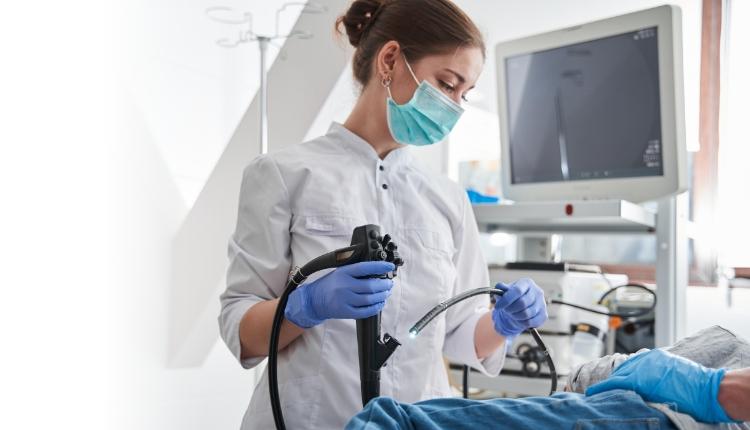
Diagnosis requires an endoscopy and a biopsy, which are performed by a gastroenterologist (GI).5
EoE Patients Rely on a Healthcare Team
ER doctors, PCPs, NPs/PAs, and pediatricians are the first line of defense in healthcare.
Help your suspected EoE patients get an official diagnosis by partnering with a specialist.
- Gastroenterologists are the only doctors who can perform the necessary endoscopy to evaluate the esophagus to diagnose EoE and determine disease progression or potential histologic remission3
- Allergists and ENTs can play an important role in the care of EoE patients due to the frequent overlap between allergic conditions and EoE. Their expertise contributes to comprehensive care for individuals with EoE6,7
ENT, ear, nose, and throat; ER, emergency room; NP, nurse practitioner; PA, physician assistant; PCP, primary care physician.
HOW TO RECOGNIZE EoE IN PATIENTS
Signs and symptoms more frequently seen in adolescents and adults (≥12 years)2,8,9:
Food
impaction
Painful
swallowing
Signs and symptoms more frequently seen in infants and children (1-11 years)10,11:
Stomach pain
Heartburn
Acid reflux
Regurgitation
Vomiting
Difficulty
swallowing
Food getting
stuck
Food refusal
Since EoE shares similar symptoms with gastroesophageal reflux disease (GERD) and other atopic conditions, misdiagnosis is common. As recommended by the American Society for Gastrointestinal Endoscopy (ASGE), ensuring your patient gets an endoscopy is critical to avoid unnecessary delays in their diagnosis and treatment.3,6,12
WHEN EoE IS DIAGNOSED, ADDRESSING THE UNDERLYING
CHRONIC TISSUE INFLAMMATION IS CRUCIAL13
Consider whether DUPIXENT is appropriate for your patient.
The mechanism of dupilumab action has not been definitively established.14

Dr. Wechsler, MD, MSCI
For me, as a doctor, one of the biggest things is making sure that when I’m explaining something that my patients are understanding. So I’m frequently checking in with the family, with the parent, even with the kid. “Are you, is what I’m saying makes sense?” And I think it’s so critical for that back and forth, because I think for the empowerment, for the patient, for the family, they need to be able to understand what the options are and medically what the implications are.

DUPIXENT MyWay is a patient support program that can help enable access to DUPIXENT and offers financial assistance for eligible patients, one-on-one nursing support, and more.
ACG, American College of Gastroenterology.