)
Dual-inhibition of IL-4 and IL-13 signaling helps target
underlying inflammation in EoE1,10,*:
DUPIXENT has results in 3 key pillars of EoE management.

HISTOLOGY
Impact on
eosinophilic inflammation

SYMPTOMS
Impact on frequency and
severity of symptoms

ENDOSCOPIC FEATURES
Impact on visible inflammation
and fibrosis in the esophagus
EoE CAN LEAD TO PROGRESSIVE
TISSUE REMODELING
AND FIBROSIS3,4
Duration of disease
Normal
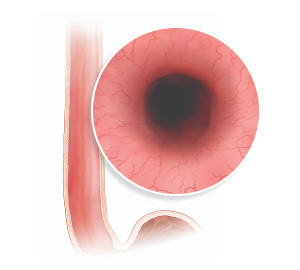
Inflammation
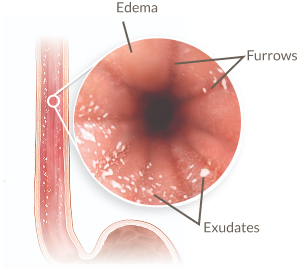
Inflammation
+ Fibrosis
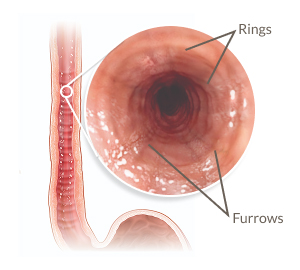
Fibrosis
+ Inflammation
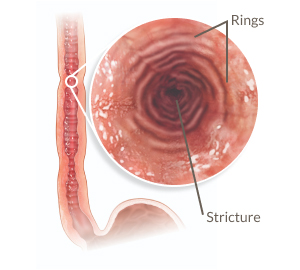
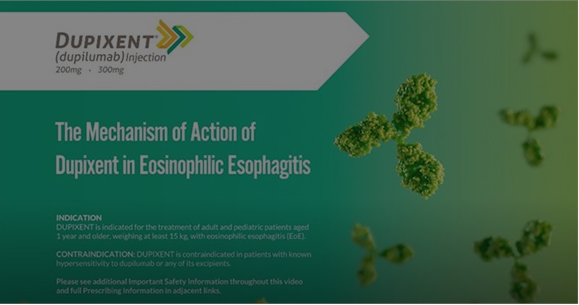
See the MOA of DUPIXENT
HEAR FROM A PROVIDER:
DR. JOSHUA WECHSLER, MD, MSCI
Listen to Dr. Wechsler’s insight for helping
pediatric
patients articulate their symptoms.

Dr. Wechsler, MD, MSCI
Typically when I’m talking to a patient for the first time about a new EoE diagnosis, for me, I’m really focused in on the fact that this is chronic disease. They’re most likely going to have it lifelong and that if we don’t really treat this disease, it’s going to lead to narrowing of the esophagus, which means food’s going to get stuck. I think that’s probably more challenging when they’re young and it’s really hard to perceive those. When you experience it, it’s probably even more real.
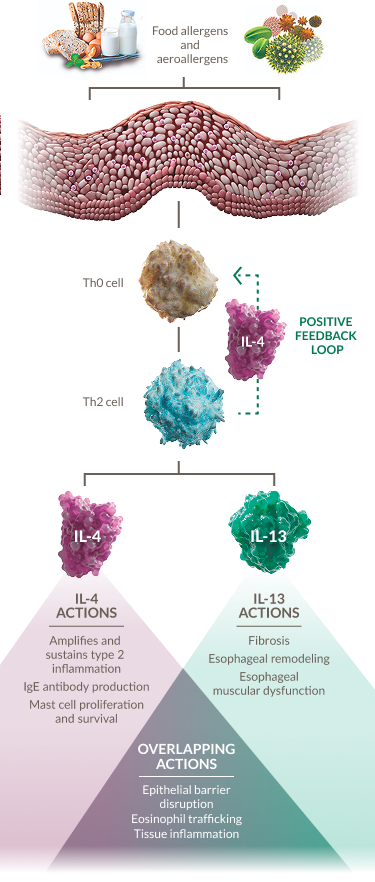
IL-4 and IL-13 are two
of the key drivers of type 2
inflammation, resulting
In histologic, symptomatic,
and endoscopic
manifestations of EoE2,5-9
Underlying TYPE 2 inflammation drives SIGNS & symptoms including2,4,6,10:
Adult/adolescent (≥12 years)
Food
impaction
Dysphagia
Heartburn/
acid reflux
Painful
swallowing
Pediatric (1-11 years)
Stomach
pain
Food
refusal
Heartburn/
acid reflux
Regurgitation/
vomiting
of EoE patients present with one or more conditions driven in part by type 2 inflammation11
DUPIXENT TARGETS TWO OF THE KEY DRIVERS OF TYPE 2 INFLAMMATION
AND IMPACTS THE PATHOLOGICAL CHANGES AND SYMPTOMS IN EoE1,*
*The mechanism of dupilumab action has not been definitively established.1
See how type 2 inflammation can manifest in EoE