
Proven results in patients 12+ years of age at Week 241,2
Use of DUPIXENT for the CSU indication in patients aged 2-11 years is supported by evidence from two studies of DUPIXENT in CSU patients 12+ years of age.1
Your first-line systemic choice
For appropriate CSU patients aged 2+ years who remain symptomatic despite treatment
with H1 antihistamines

prescribed biologic
by dermatologists2,a

patients on therapy
across approved indications worldwide2,b
aIQVIA SMART Portal Patient Insights as of June 2026.
bThe worldwide patient number is largely comprised of patients treated with DUPIXENT from 11 countries (Brazil, Canada, China, France, Germany, Italy, Japan, the Netherlands, Spain, UK, and US) and the rest of the world comprising ≈12% of this worldwide patient number. This number is composed of the following US-approved indications: AD, asthma, BP, COPD, CRSwNP, CSU, PN, and EoE. Data through March 2026.
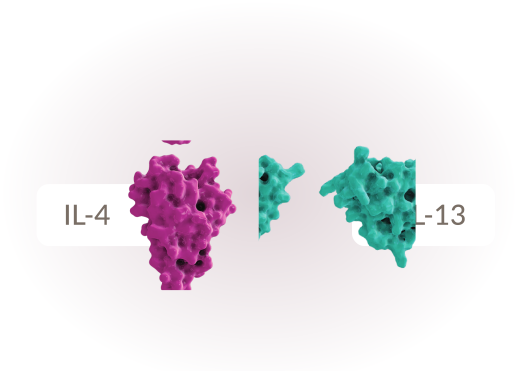
The only dual inhibitor of IL-4 and IL-13 signaling1,3

DUPIXENT binds to IL-4 receptor alpha, inhibiting
IL-4 and IL-13 induced inflammatory responses
The mechanism of dupilumab action has not been definitively established.
Demonstrated safety profile
Most common adverse reactions (incidence ≥2%) in patients 12+ years of age with chronic spontaneous urticaria are injection site reactions.1,a
The safety of DUPIXENT was assessed in 18 subjects 2-11 years of age who received DUPIXENT based on weight.No new adverse reactions were identified in pediatric subjects aged 2-11 years who received DUPIXENT.1
aInjection site reactions cluster includes injection site dermatitis, injection site erythema, injection site hematoma, injection site induration, injection site pain, injection site pruritus, injection site reaction, injection site swelling.
Attributes and considerations

NOT AN
IMMUNOSUPPRESSANT
OR A STEROID1

NO KNOWN
DRUG-TO-DRUG
INTERACTIONS1
Not metabolized through the liver or excreted through the kidneys

NO INITIAL LAB TESTING OR
ONGOING LAB MONITORING
according to the Prescribing Information1

AT-HOME
SELF-ADMINISTRATION1
Train patients and/or caregivers on proper administration prior to use

NO BOXED WARNING1
Please see additional Warnings and Precautions in the Prescribing Information and Important Safety Information below.
SELECT IMPORTANT SAFETY INFORMATION
WARNINGS AND PRECAUTIONS
Hypersensitivity: Hypersensitivity reactions, including anaphylaxis, acute generalized exanthematous pustulosis (AGEP), serum sickness or serum sickness-like reactions, angioedema, generalized urticaria, rash, erythema nodosum, and erythema multiforme have been reported. A case of AGEP was reported in an adult subject who participated in the bullous pemphigoid development program. If a clinically significant hypersensitivity reaction occurs, institute appropriate therapy and discontinue DUPIXENT.

DUPIXENT MyWay is a patient support program that can help enable access to DUPIXENT and offers financial assistance for eligible patients, one-on-one nursing support, and more.
AD, atopic dermatitis; BP, bullous pemphigoid; COPD, chronic obstructive pulmonary disease; CRSwNP, chronic rhinosinusitis with nasal polyps; CSU, chronic spontaneous urticaria; EoE, eosinophilic esophagitis; PN, prurigo nodularis.