DUPIXENT sustained lung function improvement in children
aged 6-11 years through Year 13
improvement was seen with DUPIXENT at Week 12
in percent predicted pre-bronchodilator
FEV1 vs placebo (key secondary endpoint)1
-
5.21% improvement in percent predicted pre-bronchodilator
FEV1 in children aged 6-11 with EOS ≥150 cells/μL or FeNO ≥20 ppb
at Week 12 with DUPIXENT 100 mg/200 mg Q2W + SOC (n=229) vs placebo + SOC (n=110) -
5.32% improvement in percent predicted pre-bronchodilator
FEV1 in children aged 6-11 with EOS ≥300 cells/μL (n=175) at Week 12 with
DUPIXENT 100 mg/200 mg Q2W + SOC (n=168) vs placebo + SOC (n=80)
improvement was seen with DUPIXENT at Week 52
in percent predicted pre-bronchodilator
FEV1 vs placebo (other secondary endpoint)1
-
7.79% LSM improvement in percent predicted pre-bronchodilator FEV1 in children with
EOS
≥150 cells/μL or FeNO ≥20 ppb (n=236)
at Week 52 with DUPIXENT 100 mg/200 mg Q2W + SOC vs placebo + SOC (n=114) -
8.35% LSM improvement in percent predicted pre-bronchodilator FEV1 in children with
EOS
≥300 cells/μL (n=175) at Week 52 with
DUPIXENT 100 mg/200 mg Q2W + SOC vs placebo + SOC (n=84)
(post hoc analysis)
Exacerbation reduction observed in lung function responders4
risk reduction
in severe exacerbations4,d
Children treated with DUPIXENT vs placebo who had a ≥5% improvement in percent predicted pre-bronchodilator FEV1 at Week 12 showed a 60% risk reduction in severe exacerbation rates.
In VOYAGE4:
- In children with blood EOS ≥150 cells/μL or FeNO ≥20 ppb who achieved ≥5% improvement in percent predicted pre-bronchodilator FEV1 at Week 12, the adjusted annualized severe exacerbation rate through Week 52 was 0.251 in the DUPIXENT 100 mg/200 mg Q2W + SOC group (n=141) and 0.626 in the placebo + SOC group (n=57) (reduction in relative risk vs matching placebo: 60.0% [95% CI: 0.16, 0.41])
- In children with blood EOS ≥150 cells/μL or FeNO ≥20 ppb who achieved ≥10% improvement in percent predicted pre-bronchodilator FEV1 at Week 12, the adjusted annualized severe exacerbation rate through Week 52 was 0.304 in the DUPIXENT 100 mg/200 mg Q2W + SOC group (n=106) and 0.744 in the placebo + SOC group (n=36) (reduction in relative risk vs matching placebo: 59.0% [95% CI: 0.19, 0.50])
Results are descriptive. Definitive conclusions cannot be made as this was a post hoc analysis. There are limitations on sample size, and data were not multiplicity controlled.
dSevere exacerbation was defined as an event requiring SCS for ≥3 days, hospitalization, or an ED visit.2
DUPIXENT was proven to significantly improve and sustain lung function in children aged 6-11 years2
DUPIXENT lung function improvement results in children aged 6-11 years through Year 22
Change from PSBL in percent predicted pre-bronchodilator FEV1 over time in children with blood EOS count ≥150 cells/µL or FeNO ≥20 ppb at PSBL (secondary endpoint)2
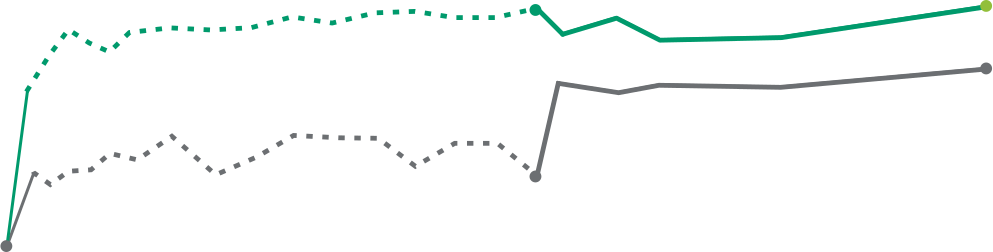
EXCURSION OLE results are descriptive. Definitive conclusions cannot be made.
Data were not multiplicity controlled and there are limitations associated with open-label study design, including lack of comparator arm, decreasing sample size, and potential continued involvement of responders and attrition of nonresponders.
- At PSBL, mean percent predicted pre-bronchodilator FEV1 was 76.9% in the DUPIXENT/DUPIXENT group (n=209) and 78.7% in the placebo/DUPIXENT group (n=106)2
- In patients initiated with placebo who switched to DUPIXENT (n=106) at Week 52 of VOYAGE, rapid improvement in percent predicted pre-bronchodilator FEV1 was observed as early as Week 2 (mean change from baseline: 8.7%, secondary endpoint)2
- By Week 52 in EXCURSION, percent predicted pre-bronchodilator FEV1 improvement results from baseline were 12.6% in the DUPIXENT/DUPIXENT group (n=209) and 9.4% in the placebo/DUPIXENT group (n=106) (secondary endpoint)2
78% of children who continued on DUPIXENT had percent predicted pre-bronchodilator FEV1 ≥80% by the end of Year 22,e
e(n=143/184) measured as percent predicted pre-bronchodilator FEV1 ≥80% by Week 52.2
EOS, eosinophil; FeNO, fractional exhaled nitric oxide; FEV1, forced expiratory volume in 1 second; LSM, least squares mean; OLE, open-label extension; PSBL parent study baseline; Q2W, once every 2 weeks; QoL, quality of life; SCS, systemic corticosteroid SOC, standard of care.