DUPIXENT significantly reduced exacerbations in children aged 6-11 years through Year 11
Annualized rate of severe exacerbations through Week 52 in
eosinophilic phenotype
VOYAGE (primary endpoint)1,a
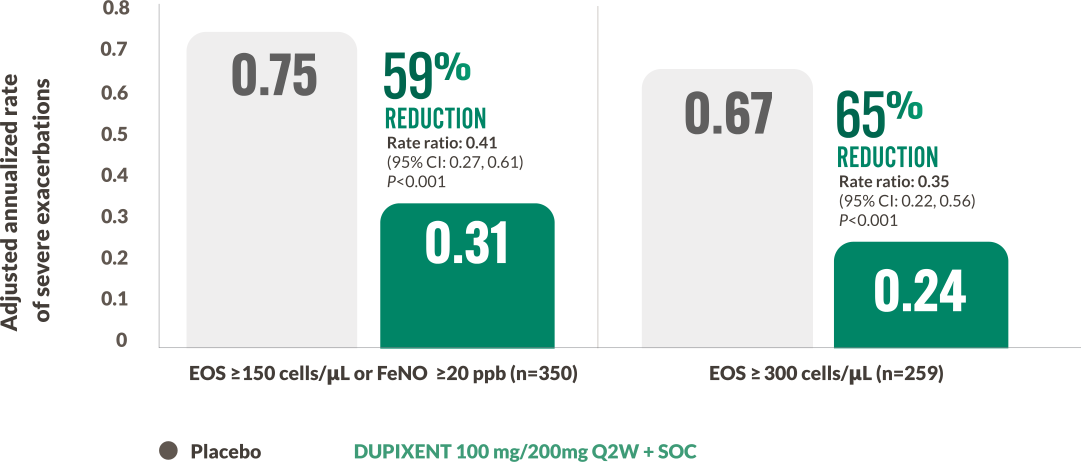
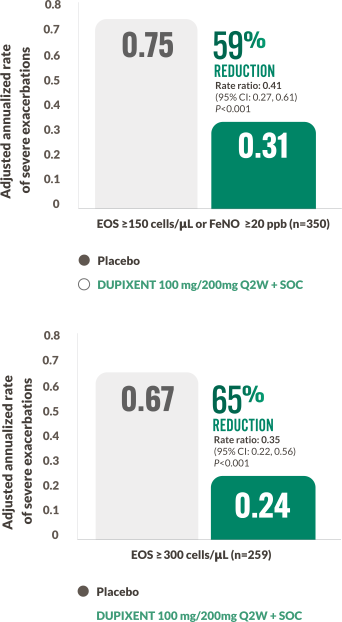
Weight-based dosing: DUPIXENT 100 mg Q2W (<30 kg) or 200 mg Q2W (≥30 kg).1
aSevere exacerbations were defined as deterioration of asthma requiring the use of SCS for at least 3 days or hospitalization or ED visit due to asthma that required SCS.1
Results in severe exacerbation reduction in children aged 6-11 years through Year 22
reduction
in unadjusted annualized severe exacerbation rate in patients who enrolled in EXCURSION OLE (DUPIXENT/DUPIXENT group [rate: 0.118; n=209]) from PSBL through Year 2 in patients with moderate-to-severe asthma (EOS count ≥150 cells/μL or FeNO ≥20 ppb) (PSBL rate: 2.56) (secondary endpoint)2,b
- 94% reduction in unadjusted annualized severe exacerbation rate in patients who enrolled in EXCURSION OLE (placebo/DUPIXENT group [rate: 0.124; n=106]) from PSBL through Year 2 in patients with moderate-to-severe asthma (EOS count ≥150 cells/μL or FeNO ≥20 ppb) (PSBL rate: 2.16) (secondary endpoint)2
EXACERBATIONS IN 91% OF CHILDREN AGED
6-11 years THROUGH YEAR 2 (EXCURSION OLE)2,c
EXCURSION OLE results are descriptive. Definitive conclusions cannot be made.
Data were not multiplicity controlled, and there are limitations associated with open-label study design, including lack of comparator arm, decreasing sample size, and potential continued involvement of responders and attrition of nonresponders.
bSevere exacerbation was defined as an event requiring SCS for ≥3 days, hospitalization, or an ED visit.2
cMost children (286 [91%] of 315) remained exacerbation-free throughout the study.2
ED, emergency department; EOS, eosinophil; FeNO, fractional exhaled nitric oxide; OLE, open-label extension; PSBL parent study baseline; Q2W, once every 2 weeks; QoL, quality of life; SCS, systemic corticosteroid; SOC, standard of care.